
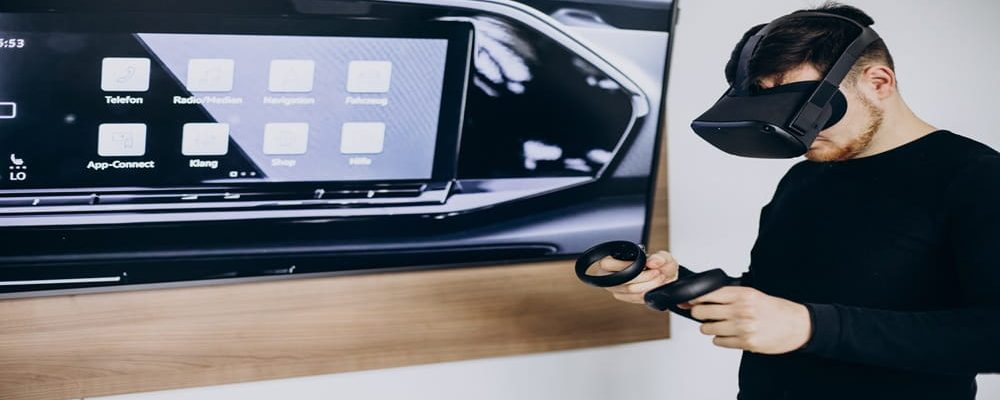
How Automotive Suppliers win OEM Contracts faster with XR
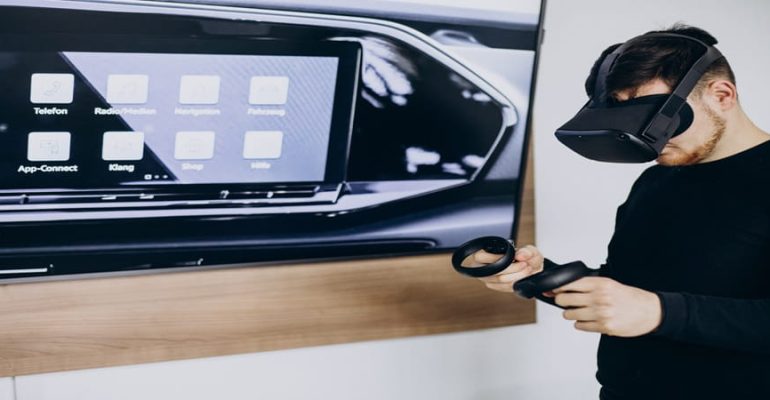
How Automotive Suppliers win OEM Contracts faster with XR
In today’s automotive industry, winning an OEM contract is no longer just about offering the lowest price or meeting technical specifications. OEMs are under constant pressure to shorten development cycles, reduce risk, ensure quality, and choose partners who can move fast and scale confidently.
This is where Extended Reality (XR) is quietly becoming a competitive advantage for automotive suppliers.
From Tier 1 and Tier 2 manufacturers to specialized component suppliers, companies using XR are not just impressing OEMs; they are closing deals faster, reducing approval delays, and standing out in an overcrowded supplier ecosystem.
This blog breaks down how automotive suppliers are using XR to win OEM contracts faster, with real-world use cases, clear business outcomes, and practical insights for decision-makers.
Why is OEM contract approval slowing down for most suppliers?
Before we talk about XR, let’s address the real challenges suppliers face during OEM evaluations.
OEMs today demand:
- Faster design validation
- Zero-error manufacturing readiness
- Transparent quality assurance
- Minimal risk before onboarding a supplier
Yet, traditional supplier evaluation methods are slow as below.
- Physical prototypes take weeks or months
- On-site factory audits require travel and coordination
- Design changes cause repeated approval loops
- Demonstrations depend heavily on static presentations
As a result, OEM decision cycles stretch longer, and suppliers lose opportunities not because they lack capability, but because they lack speed and clarity.
What Is XR? and Why OEMs are paying attention to It.
Extended Reality (XR) includes:
- Virtual Reality (VR) – Immersive simulations and walkthroughs
- Augmented Reality (AR) – Digital overlays on real-world equipment
- Mixed Reality (MR) – Interactive blending of physical and digital environments
In automotive manufacturing, XR is no longer experimental. OEMs are already using XR internally for:
- Design reviews
- Assembly validation
- Training
- Quality inspections
So when a supplier uses XR, it immediately signals:
“This supplier understands how modern automotive manufacturing works.” and that alone builds trust.
How XR helps Automotive Suppliers win OEM contracts faster?
1. Virtual Factory WalkthroughswhichPhysical Audits
One of the biggest bottlenecks in OEM onboarding is the factory audit process.
With XR, suppliers can offer:
- Fully immersive virtual plant walkthroughs
- Line-by-line production visualization
- Safety, quality, and compliance demonstrations
OEM teams can explore:
- Production flow
- Equipment layout
- Quality checkpoints
- Safety zones
all without visiting the facility.
Business impact:
- Audit timelines reduced by weeks
- Faster shortlisting
- Easier global OEM collaboration
For decision-makers, this removes friction and accelerates trust.
2. XR-based Product Demonstrationsinstead of Physical Samples
Sending physical samples for evaluation is expensive, time-consuming, and often repeated multiple times due to design changes.
XR enables suppliers to:
- Showcase 3D interactive product models
- Demonstrate internal components and assemblies
- Simulate performance scenarios
OEM engineers can:
- Inspect components virtually
- Validate fitment and integration
- Suggest changes in real time
Result:
Faster technical approvals and fewer redesign loops.
This is especially powerful for suppliers dealing with:
- Powertrain components
- EV parts
- Precision assemblies
- Custom automotive modules
3. Faster Design Validation and Engineering Approvals
OEMs are extremely cautious about onboarding suppliers whose designs haven’t been validated thoroughly.
XR helps suppliers:
- Run virtual design reviews
- Simulate assembly feasibility
- Identify errors before physical production
Using VR and MR:
- Engineering teams collaborate remotely
- OEM stakeholders visualize designs clearly
- Changes are approved faster
This reduces:
- Prototype costs
- Approval cycles
- Engineering back-and-forth
For OEMs, this signals low-risk partnership potential.
4. XR Simulationswhichprove Manufacturing Readiness
OEMs don’t just buy parts they buy manufacturing reliability.
XR simulations allow suppliers to demonstrate:
- Production line readiness
- Cycle time optimization
- Operator workflows
- Bottleneck analysis
Instead of explaining processes through slides, suppliers show them live in XR.
This answers critical OEM questions:
- Can this supplier scale?
- Is the process stable?
- Will quality remain consistent?
Suppliers who answer these visually win confidence faster.
5. Remote Stakeholder Reviews Without Delays
OEM decisions often involve:
- Engineering teams
- Quality managers
- Procurement leaders
- Global stakeholders
Scheduling physical meetings delays approvals.
With XR:
- Multiple stakeholders join the same virtual environment
- Reviews happen in real time
- Decisions are faster and more aligned
This significantly shortens:
- Internal OEM decision cycles
- Supplier evaluation timelines
Why OEMs trust XR-enabled suppliers.
From an OEM’s perspective, XR adoption shows that a supplier:
- Invests in innovation
- Understands Industry 4.0
- Is prepared for digital transformation
- Can support future scalability
XR becomes a credibility signal, not just a tool.
In competitive RFQs, this differentiation matters more than many suppliers realize.
XR ss especially Powerful for Tier 1 and Tier 2 Automotive Suppliers, it
- Compete with larger players
- Present enterprise-level capabilities
- Reduce dependency on physical infrastructure
Smaller but XR-enabled suppliers often outperform larger, traditional competitors during evaluations because they communicate value better.
Measurable Business Benefits Suppliers Are Seeing
Automotive suppliers using XR report:
- Faster OEM approvals
- Reduced pre-sales costs
- Shorter sales cycles
- Higher conversion from RFQs to contracts
More importantly, they move from being just another supplier to becoming a strategic partner.
Is XR only for large Automotive Companies?
No.
Today’s XR solutions are:
- Scalable
- Customizable
- Deployable without costly infrastructure
Even mid-sized suppliers can start with:
- Virtual demos
- XR-based presentations
- Limited-scope simulations
The ROI often shows up before the first contract is signed.
How Automotive Decision-Makers should look at XR today,
If you are:
- A supplier trying to win OEM contracts
- A manufacturing leader aiming to reduce sales friction
- A business head looking for competitive differentiation
XR should be viewed as:
A deal-acceleration tool, not a future experiment.
Final Thoughts: XR is not optional for Automotive Suppliers.
OEM expectations are evolving faster than traditional supplier processes.
Automotive suppliers who adopt XR:
- Communicate better
- Move faster
- Win trust earlier
- Close contracts sooner
Those who don’t risk being perceived as outdated even if their manufacturing capabilities are strong.
The question is no longer “Should we use XR?”
It’s “How soon can we use XR to stay competitive?”
At Sapizon Technologies, we help automotive suppliers leverage XR solutions to showcase capabilities, accelerate OEM approvals, and gain a competitive edge in high-stakes evaluations.
Connect with us to explore how XR can give your business a competitive edge.