
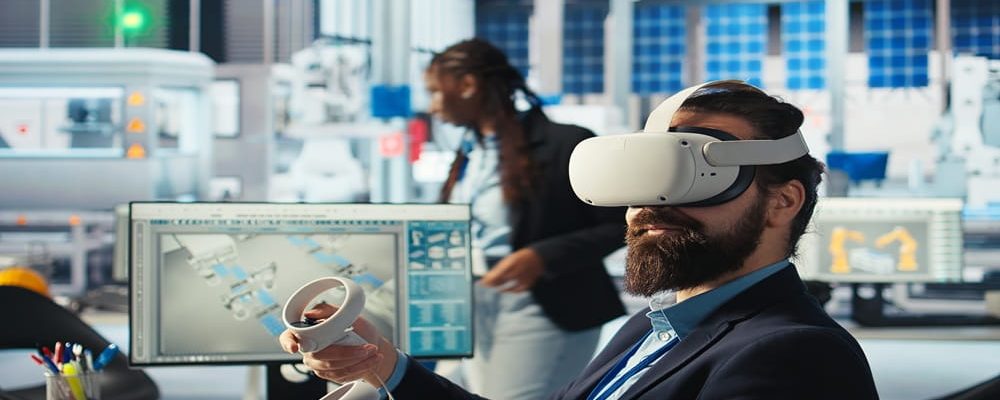
Struggling with Skilled Labor Shortage? Try XR
Struggling with Skilled Labor Shortage? Try XR
The global manufacturing and industrial sectors are facing a serious challenge: a growing shortage of skilled labor. From shop floors to maintenance teams, companies are struggling to find workers who are trained, efficient, and ready to handle modern technologies. This issue is not limited to one region; it is a widespread problem affecting industries across the world.
As technology evolves rapidly, the skills required to operate machinery, perform maintenance, and manage complex systems are also changing. Traditional training methods are no longer enough to keep up with this demand. This is where Extended Reality (XR) is emerging as a powerful solution.
XR, which includes Augmented Reality (AR), Virtual Reality (VR), and Mixed Reality (MR), is transforming how companies train, upskill, and retain their workforce. In this blog, we will explore how XR can help businesses overcome the skilled labor shortage and build a future-ready workforce.
Understanding the Skilled Labor Shortage
The skilled labor shortage refers to the gap between the skills that employers’ need and the skills workers actually have. This gap is increasing due to several reasons:
- Aging workforce and retirement of experienced workers.
- Rapid adoption of advanced technologies in industries.
- Lack of industry-specific training programs.
- Limited hands-on experience among new employees.
- High employee turnover rates.
Key Challenges Faced by Businesses
- Long training periods: It takes months to train new employees using traditional methods.
- High training costs: Physical training setups, instructors, and materials increase expenses.
- Human errors: Inexperienced workers are more likely to make costly mistakes.
- Safety risks: Untrained workers can lead to workplace accidents.
- Low productivity: Lack of skilled workers directly impacts output and efficiency.
These challenges highlight the urgent need for smarter and faster training solutions.
What is XR and How Does It Work?
Extended Reality (XR) is an umbrella term that combines:
Augmented Reality (AR): Overlays digital information onto the real world
Virtual Reality (VR): Creates a fully immersive digital environment
Mixed Reality (MR): Blends real and virtual elements for interactive experiences
XR uses devices such as headsets, smart glasses, and mobile applications to create interactive training environments. These environments allow users to learn by doing things, rather than just reading or watching.
Why XR is the Perfect Solution for Skilled Labor Shortage
XR addresses the core problems of training, skill development, and workforce efficiency. Here’s how:
1. Faster Training and Onboarding
Traditional training methods rely heavily on manuals, classroom sessions, and shadowing experienced workers. This process is slow and often inconsistent.
XR transforms training by:
- Providing immersive, hands-on learning experiences.
- Allowing employees to practice in a virtual environment.
- Reducing dependency on physical equipment.
- Standardizing training across all employees.
As a result, new workers can become job-ready much faster.
2. Cost-Effective Training Solutions
Training costs can be a major burden for companies, especially when dealing with complex machinery and processes.
XR helps reduce costs by:
- Eliminating the need for physical training setups.
- Reducing travel and instructor expenses.
- Minimizing equipment damage during training.
- Allowing repeated practice without additional cost.
Over time, XR delivers a higher return on investment compared to traditional training methods.
3. Real-Time Guidance with AR
One of the biggest challenges for workers is performing tasks correctly without constant supervision.
AR provides real-time assistance by:
- Displaying step-by-step instructions on devices.
- Highlighting machine parts and procedures.
- Offering remote expert support.
- Reducing dependency on senior workers.
This enables even less experienced employees to perform complex tasks with confidence.
4. Improved Safety and Risk Management
Workplace safety is a critical concern, especially in industries like manufacturing, automotive, and heavy engineering.
XR improves safety by:
- Simulating dangerous scenarios in a risk-free environment.
- Training workers on emergency procedures.
- Reducing accidents caused by human error.
- Building confidence before handling real equipment.
Employees can learn from mistakes without facing real-world consequences.
5. Bridging the Skills Gap
XR makes it easier to transfer knowledge from experienced workers to new employees.
- Captures expert knowledge in digital formats
- Creates repeatable training modules
- Ensures consistency in skill development
- Helps companies retain critical knowledge
This is especially useful when experienced workers retire or leave the organization.
6. Increased Productivity and Efficiency
A well-trained workforce directly contributes to better productivity.
XR helps improve efficiency by:
- Reducing downtime during training.
- Enabling faster problem-solving.
- Improving accuracy in operations.
- Enhancing worker confidence.
Employees can perform tasks more efficiently, leading to higher output and better quality.
Real-World Use Cases of XR in Industry
XR is already being used by leading companies across various sectors. Here are some common applications:
Manufacturing Training
- Assembly line simulations.
- Machine operation training.
- Quality control processes.
Maintenance and Repair
- AR-guided equipment maintenance.
- Remote troubleshooting.
- Predictive maintenance training.
Automotive Industry
- Virtual prototyping
- Technician training
- Assembly optimization
Field Service
- Remote assistance using AR.
- Step-by-step repair instructions.
- Reduced service time.
XR vs Traditional Training Methods
Let’s compare XR with traditional training approaches:
Traditional Training
- Time-consuming
- Expensive
- Limited hands-on experience
- Higher risk of errors
- Inconsistent learning outcomes
XR-Based Training
- Faster and scalable
- Cost-efficient in the long run
- Highly interactive and engaging
- Safe learning environment
- Consistent and measurable results
This comparison clearly shows why businesses are shifting toward XR solutions.
Key Benefits of XR for Businesses
Here are the major advantages of adopting XR:
- Faster employee onboarding
- Reduced training costs
- Improved workforce productivity
- Enhanced safety standards
- Better knowledge retention
- Scalable training solutions
- Competitive advantage in the market
Challenges of Implementing XR (And How to Overcome Them)
While XR offers many benefits, businesses may face some challenges:
Initial Investment
- XR setup costs can be high initially.
- However, long-term ROI outweighs the cost.
Technology Adoption
- Employees may take time to adapt.
- Proper training and support can solve this.
Content Development
- Creating XR training content requires expertise.
- Partnering with the right technology provider is key.
Future of Workforce Training with XR
The future of training is digital, immersive, and data driven. As industries continue to evolve, XR will play a crucial role in workforce development.
Emerging trends include:
- Integration of XR with AI and IoT
- Personalized training experiences
- Real-time performance analytics
- Cloud-based XR platforms
Companies that adopt XR early will have a significant advantage in overcoming workforce challenges.
Conclusion
The skilled labor shortage is a serious challenge, but it is not impossible to overcome. Businesses need to move beyond traditional training methods and adopt innovative solutions that are faster, safer, and more effective.
Extended Reality (XR) provides a practical and scalable way to train employees, reduce costs, improve productivity, and bridge the skills gap. It empowers organizations to build a skilled workforce ready for the demands of modern industry.
Companies that embrace XR today will not only solve their current workforce challenges but also prepare themselves for the future of work.
Sapizon Technologies can help businesses implement customized XR solutions tailored for manufacturing and automotive industries, enabling faster training, improved efficiency, and long-term growth.