
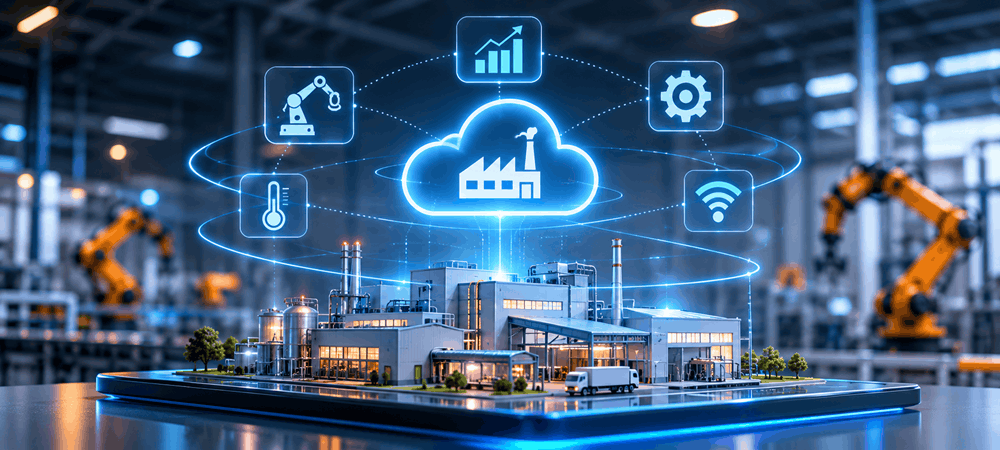
How Web Applications Support Industrial IoT and Connected Factories
How Web Applications Support Industrial IoT and Connected Factories
Manufacturing industries are becoming more connected as businesses adopt digital technologies to improve production, monitor equipment, and manage factory operations. Web applications for Industrial IoT are playing an important role in this transformation by connecting machines, sensors, production systems, and business operations through centralized digital platforms. Instead of depending on manual monitoring and disconnected systems, manufacturers can use web-based applications to access real-time information, track equipment performance, and make better operational decisions. As smart manufacturing continues to grow, web applications are becoming an essential part of building efficient and connected factories.
What Is Industrial IoT and How Does It Work?
Industrial Internet of Things (IIoT) refers to the use of connected sensors, machines, devices, and software systems in industrial environments. These technologies collect and exchange data to help businesses monitor operations, identify problems, and improve productivity.
For example, sensors installed on manufacturing equipment can collect information about temperature, vibration, pressure, operating speed, and machine performance. This information can then be transferred to connected software platforms for monitoring and analysis.
However, collecting industrial data is only one part of the process. Businesses also need a convenient way to access, understand, and manage that information.
This is where web applications become valuable.
A web application can act as a centralized interface between industrial devices and the people responsible for managing factory operations. Employees can access machine information, production reports, maintenance alerts, and operational dashboards through a browser without installing complex software on every computer.
Together, Industrial IoT and web applications help manufacturers create more connected, data-driven working environments.
Why Connected Factories Need Web Applications
Traditional manufacturing environments often depend on manual inspections, separate monitoring systems, spreadsheets, and disconnected machines. Managing information across these systems can become difficult, especially when factories operate multiple production lines or facilities.
For example, a production manager may need information about machine performance from one system, maintenance records from another, and production reports from a separate platform.
This creates information gaps and makes it harder to understand what is happening across the factory.
Web applications help address these challenges by bringing important operational information into one accessible platform.
Here is how they support connected manufacturing environments:
- Centralized access to industrial data.
- Real-time equipment and production monitoring.
- Improved communication between departments.
- Faster identification of equipment issues.
- Better visibility into manufacturing operations.
- Easier access to reports and performance information.
By connecting different industrial systems, web applications help businesses manage factory operations more efficiently.
7 Ways Web Applications Support Industrial IoT and Connected Factories
1. Real-Time Machine Monitoring
One of the most important applications of Industrial IoT is monitoring machine performance in real time.
Manufacturing equipment operates continuously, and even a small performance issue can affect production schedules. Without proper monitoring, identifying unusual machine behavior may require manual inspections or waiting until a problem becomes visible.
Industrial IoT sensors can collect machine data such as temperature, vibration, pressure, and operating speed. A connected web application can display this information through interactive dashboards.
For example, a factory manager can open a web-based monitoring dashboard and check the operating status of multiple machines from a single screen.
If a machine starts operating outside its normal temperature range, the system can generate an alert based on predefined conditions.
This helps maintenance teams investigate potential problems earlier and maintain better visibility into equipment performance.
2. Predictive Maintenance and Equipment Management
Unexpected machine breakdowns can interrupt production, increase maintenance expenses, and affect delivery schedules.
Traditional maintenance practices often depend on fixed service schedules or repairs after equipment failure. While these methods can be useful, they may not always identify developing equipment problems early.
Industrial IoT combined with web applications can support predictive maintenance strategies.
Sensors continuously collect equipment performance data, while connected applications help organize and display that information. When integrated with suitable analytics or machine learning systems, the platform can help identify unusual patterns that may indicate developing equipment issues.
For example, increasing vibration levels in a motor may indicate a possible mechanical problem.
A maintenance dashboard can display the warning, show relevant equipment information, and help technicians review maintenance history before taking action.
This allows businesses to plan maintenance activities more effectively and reduce the risk of unexpected downtime.
3. Centralized Production Monitoring
Managing multiple production lines can be challenging, particularly in large manufacturing facilities.
Production managers need visibility into machine availability, production quantities, operational delays, and overall workflow performance.
Web applications provide a centralized platform where production-related information can be displayed in an organized format.
For example, a manufacturing dashboard can show:
- Current production status.
- Machine operating hours.
- Production targets and completed units.
- Equipment downtime.
- Production line performance.
- Pending maintenance activities.
Instead of collecting information manually from different departments, managers can access relevant updates through a single application.
This improves operational visibility and helps decision-makers identify production bottlenecks more quickly.
4. Better Quality Control Through Connected Systems
Product quality is a major concern for manufacturers. Even minor production variations can result in defective products, material waste, and additional operational costs.
Industrial IoT devices can monitor important production parameters such as temperature, pressure, humidity, and machine speed.
When connected to a web application, this information can be displayed through dashboards that help quality control teams monitor production conditions.
For example, in a food manufacturing facility, sensors may monitor temperature and humidity during specific production processes.
If a monitored parameter moves outside the acceptable range, the application can notify the responsible team.
Similarly, automotive manufacturers can use connected systems to monitor production conditions and maintain records for quality inspections.
This helps businesses improve process visibility and identify conditions that may affect product quality.
5. Remote Factory Monitoring and Management
Modern manufacturing businesses may operate multiple facilities in different locations. Managing all these operations from one physical location can be difficult.
Web applications make remote factory monitoring more accessible by allowing authorized employees to view operational information through internet-connected devices.
For example, a production manager can check machine status, review production reports, and receive maintenance notifications without being physically present on the factory floor.
Depending on the system design, remote monitoring can also support communication between maintenance teams, production managers, and other departments.
This is particularly useful for businesses with multiple manufacturing units or geographically distributed operations.
However, remote access must be supported by proper authentication, network security, and access permissions to protect industrial systems.
6. Improved Inventory and Supply Chain Visibility
Manufacturing operations depend on the availability of raw materials, spare parts, and finished products.
When inventory information is not updated regularly, businesses may face material shortages, excess stock, or delays in production.
Industrial IoT devices, barcode systems, RFID technology, and connected business applications can help improve inventory visibility.
For example, sensors and connected tracking systems can collect information about material movement and storage conditions. A web-based inventory application can organize this information and help employees monitor stock levels.
When integrated with suitable ERP or supply chain management systems, the application can provide a broader view of inventory and production requirements.
This helps businesses coordinate material availability, reduce manual tracking efforts, and manage supply chain operations more effectively.
7. Data-Driven Decision-Making
Manufacturing businesses generate large amounts of operational data every day. However, data becomes valuable only when it can be understood and used effectively.
Web applications help transform industrial information into meaningful reports, charts, and dashboards.
For example, a factory manager can review historical production data, compare machine performance, identify recurring downtime patterns, and evaluate operational efficiency.
When advanced analytics and AI technologies are integrated, businesses can also explore more sophisticated insights based on available industrial data.
This supports informed decision-making rather than relying entirely on manual observations or assumptions.
Real-World Applications of Web Applications in Industrial IoT
The combination of web applications and Industrial IoT can support different manufacturing environments.
Here are some practical examples:
| Industry | Web Application and IIoT Use Cases |
| Automotive Manufacturing | Monitoring assembly lines, machine performance, and production quality. |
| Food Processing | Tracking temperature, humidity, and storage conditions. |
| Pharmaceutical Manufacturing | Monitoring production environments and maintaining process records. |
| Heavy Machinery | Equipment monitoring, maintenance alerts, and performance tracking. |
| Textile Manufacturing | Monitoring machine operations, production output, and environmental conditions. |
| Electronics Manufacturing | Tracking production parameters and supporting quality inspections. |
| Energy and Utilities | Monitoring equipment performance and operational conditions. |
These applications demonstrate how connected technologies can support different industrial requirements.
The exact functionality depends on the machines, sensors, software systems, and business processes involved.
Key Features of an Industrial IoT Web Application
Building an effective web application for a connected factory requires more than displaying machine information. The application should be designed around the operational needs of the business.
Some important features include:
1. Real-Time Dashboards: Display machine performance, production status, and important operational information in an organized format.
2. Automated Alerts and Notifications: Notify responsible employees when monitored parameters cross predefined thresholds or when specific events occur.
3. Data Visualization: Convert large amounts of industrial data into understandable charts, graphs, and reports.
4. User Access Management: Provide role-based access so that employees can view information relevant to their responsibilities.
5. Historical Data Tracking: Maintain records of machine performance, production activities, and maintenance events.
6. Third-Party System Integration: Connect with ERP, CRM, inventory management, and other business systems where required.
7. Security and Scalability: Protect industrial information and support future expansion as the factory adds more devices, machines, and users.
A well-planned application should also offer a responsive interface so authorized employees can access important information across desktops, tablets, and other supported devices.
Challenges in Implementing Web Applications for Industrial IoT
Although connected factory solutions offer several advantages, implementation comes with challenges that businesses should consider.
Legacy Equipment Integration: Many factories use older machines that may not directly support modern connectivity standards. Additional sensors, gateways, or integration solutions may be required.
Data Security: Connected industrial environments can introduce cybersecurity risks. Businesses need secure communication, authentication, access controls, and regular system updates.
Handling Large Volumes of Data: Industrial devices may generate continuous streams of information. Applications must be designed to process, store, and display relevant data efficiently.
Network Connectivity: Unstable connectivity can affect the availability of real-time information. Depending on operational requirements, businesses may need edge computing or local data-processing capabilities.
System Compatibility: Different machines and devices may use different communication protocols. Proper integration planning is important to ensure reliable data exchange.
Addressing these challenges during development helps businesses build more reliable and scalable connected factory solutions.
The Future of Web Applications in Connected Manufacturing
The future of manufacturing will involve deeper integration between Industrial IoT, Artificial Intelligence, cloud computing, and advanced analytics.
Web applications will continue to evolve from basic monitoring dashboards into intelligent platforms that help businesses manage more complex industrial operations.
AI-powered analytics can help identify unusual equipment behavior, while cloud-based platforms can make industrial information accessible across multiple facilities.
Digital twins can also benefit from connected web applications by providing interfaces to visualize equipment, production processes, and real-time operational data.
As these technologies develop, manufacturers will have more opportunities to improve operational visibility, optimize resources, and make informed decisions.
However, successful digital transformation will depend on selecting technologies that address actual business challenges rather than adopting new tools simply because they are trending.
Conclusion
Web applications are becoming an important part of Industrial IoT and connected factory environments. By connecting machines, sensors, and business systems, they help manufacturers monitor equipment, manage production activities, improve maintenance planning, and access valuable operational information.
As manufacturing businesses move toward smarter and more connected operations, investing in scalable and secure web application solutions can help them build a stronger digital foundation.
Sapizon Technologies helps businesses explore modern technology solutions through custom web application development and emerging technology integration. With a focus on business requirements and practical digital solutions, Sapizon supports organizations looking to improve their operations and move toward smarter industrial environments.
Looking to build a connected factory solution? Contact Sapizon Technologies to discuss your custom web application development requirements.